History
Carbon Valley history: three coal towns in two years, the mines that closed, and the boom that came up I-25
Fort Junction and the McKissick brothers, a coalfield of 2.56 billion tons, Frederick, Firestone and Dacono incorporated within a year of each other, the strikes, the mines closing one by one, oil and gas, and growth from 7,400 people to 37,000 in twenty years. The short history of the Carbon Valley, with sources.
· Checked October 5, 2026
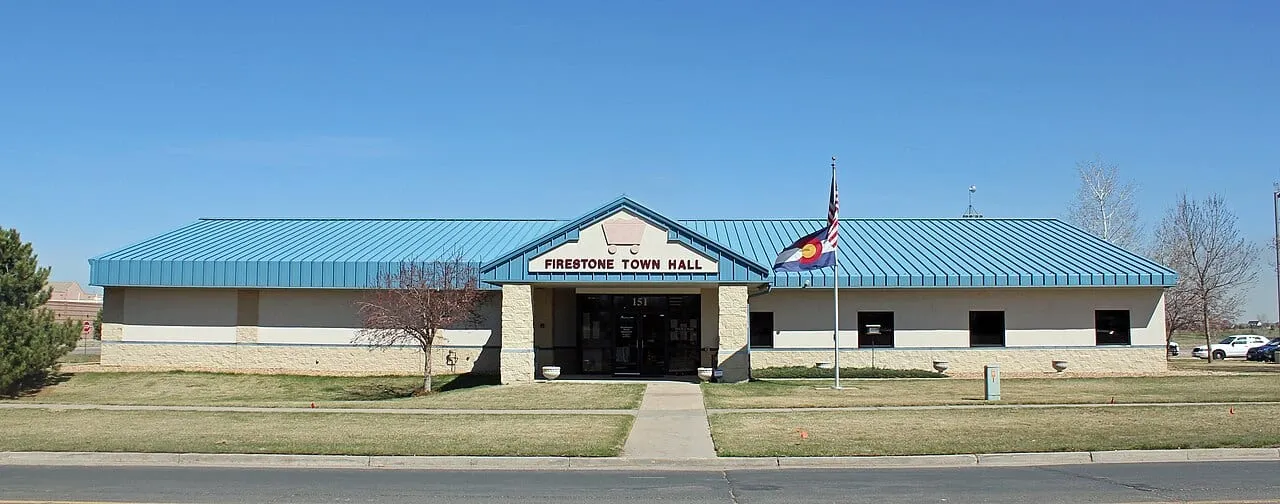
The Carbon Valley is three towns in a row along the east side of I-25 between Boulder Creek and the St. Vrain: Firestone to the north, Frederick in the middle, Dacono to the south. They were founded within a year of each other on top of the same coal, and for most of the twentieth century they were small, close and much alike, which is why their own pages call them the Tri-Towns or the Carbon Valley. Then the mines closed, the interstate arrived, and between 2000 and 2020 the three grew from about 7,400 people to about 37,000. This is the short version, from the towns’ own histories and the sources listed at the foot. Where they disagree, both are given.
Before the towns
Colorado Parks and Wildlife says the land where St. Vrain State Park now sits was once home to Ute, Arapaho and Cheyenne tribes. The 1851 Fort Laramie treaty left the Cheyenne and Arapaho holding the country south of the North Platte in common, and the park’s own history names Milo Smith, Perry L. Smith and Elisha Duncan among the settlers who later took up land east of where St. Vrain and Boulder creeks meet. During the Colorado War of 1864–65 the settlers’ Home Guard built a sod fort near the confluence, called Fort Junction. The Town of Firestone dates it to between 1863 and 1865 and places it on what is now the state park; Wikipedia’s article on the park dates the building to July 1864 and notes that nothing definitive of it has ever been found.
Three members of that Home Guard were the brothers Thomas, John and William McKissick. John was elected Weld County sheriff in 1865, and Thomas succeeded him in 1867, Firestone’s history records. It was the McKissicks who found the coal.
The coal
The coal under this corner of Weld County is the northern end of what was known as the Northern Coal Field, sub-bituminous coal that ran under Lafayette, Erie and the country north-west of Denver; in 1899 the state’s coal-mine inspector estimated the 405-square-mile field held 2.56 billion tons, and from June 1897 to May 1898 its mines shipped more than 680,000 tons to Denver.
When the McKissicks opened their mine is one of the places the sources part. Firestone’s history says the brothers discovered coal in 1872, bought railroad land and established what the Town calls Colorado’s first production coal mine, the McKissick Mine, on the site now under Saddleback Golf Club; the Wikipedia article on the state park says the McKissick Mine opened in 1887. Either way it gave its name first: Frederick was initially called McKissick, for the mine’s owner.
The miners came from a long way off. Frederick’s own history speaks of a group of mostly Italian immigrants paid $2 a day for dangerous work; Wikipedia lists immigrants from Italy, France, Greece, Turkey, several Slavic countries and Latin America; Dacono’s history names Greece, France, Bulgaria and Italy, and its 2017 comprehensive plan adds Russia, Slovenia and Mexico.
Three towns in two years
The towns were laid out in 1907 and 1908. Wikipedia’s account of the park puts the order plainly: Frederick in the middle and first, then Dacono to the south and Firestone to the north.
Frederick came first. The daughters of Frederick A. Clark, who owned the land, laid out the town site in 1907 and named it for their father, as Wikipedia has it; the Town says it was incorporated in 1907 by three young women who named it after him. The incorporation date Wikipedia takes from the State Archives is 26 December 1907.
Firestone grew from a land deal. On 27 May 1907, Firestone’s history records, the Denslow Coal and Land Company, which had bought 160 acres from Thomas McKissick’s widow, dedicated the rights of way that set the town’s boundaries; later that year Ohio investors bought Denslow out and started the Firestone Coal Company. The post office opened on 30 August 1907 and the Town was incorporated on 8 October 1908, named for Jacob H. Firestone, whom the Town calls an Ohio investor and Wikipedia a landowner. The original plat ran from First Street to Fourth Street and from McClure Avenue to Grant Avenue; the Town’s 2022 neighborhood plan says one building from that year survives, the Screwball Inn, built in 1908.
Dacono was first settled in 1901, and it is the one whose date depends on whom you ask: the City’s history says it was incorporated on 23 January 1908, when Arthur P. Church, Marion W. Church and Charles Lockhard Baum filed the papers, and Wikipedia, citing the State Archives, says 23 September 1908. The City’s plan records that seventeen residents voted for incorporation and one against. Baum, president of the Consolidated Coal and Coke Company, made the name from the first two letters of three women’s names, Daisy, Cora Van Voorhies and Nora Brooks; the City notes that the accounts disagree on who the women were to him but agree that Daisy was his wife. A railroad line, the City adds, took the coal and the farm produce to Denver, and Dacono had the area’s first depot.
The strikes
The Northern Field saw two great strikes. The Long Strike began there on 1 April 1910; Wikipedia’s Lafayette article runs it to 1914, and its article on the Colorado Coalfield War has the northern strikes slowly ending in April 1912. In October 1927 the Industrial Workers of the World called a strike that shut down nearly all of Colorado’s coal mines, and on 21 November 1927 state police and mine guards fired on about 500 unarmed miners and their wives at the Columbine Mine, killing six. The Columbine stood in Serene, a Rocky Mountain Fuel company town on the hills west of where I-25 now runs, its site today inside the town limits of Erie, a few miles south of Frederick. The dead named in the sources were from Lafayette, Erie and Louisville. The miners of the northern field won union recognition from the state’s second-largest coal operator before the strike ended in 1928.
The mines close
The mines went one town at a time. All five of Firestone’s, including the Grant Mine, which the Town says produced more than two million tons, enough to fill a coal train 200 miles long, closed in 1947, and the railway that carried their coal was decommissioned with them; its bed is now the twelve-mile Firestone Trail. The Frederick Coal mine closed in 1960. In Dacono, the City says, the mining era ran from 1900 to the late 1970s, and when oil and gas were found in the early 1970s the coal industry declined rapidly.
Without the mines the towns stayed small. The census counted 599 people in Frederick in 1950, 297 in Firestone and 258 in Dacono, and in 1990, 988, 1,358 and 2,228. Frederick remembers the 1957 flood as the time neighbors pulled together, as neighbors did again after 2013. I-25 reached the area in 1960 or 1961, depending on whether you read Dacono’s plan or the state park’s history; in 1962 old gravel ponds beside it were handed to the state for a recreation area named for Roy N. Barbour, which became St. Vrain State Park. In 1965 Gene and Gerda Heffley opened a short oval at exit 232, the Colorado National Speedway, which has raced in Dacono ever since, and in 1969, Dacono’s plan records, the valley saw its first large residential development, 480 acres of mobile and modular homes.
Oil and gas
The coal’s successor lies deeper. The Wattenberg field, discovered in 1970 and one of the first places where hydraulic fracturing was done routinely on thousands of wells, now covers more than 2,000 square miles between Denver and Greeley, most of it in Weld County; Dacono’s plan dates the discovery of oil here to 1972. The Town of Frederick says more than 600 wells have been drilled within its boundaries, and Firestone’s page says many lie within its boundaries and close by. The cost came home in April 2017, when, in Wikipedia’s words, an explosion caused by an untapped gas well destroyed a home on Twilight Avenue in Firestone, killing two people and seriously injuring a third; it prompted a statewide discussion of fracking and drilling.
The boom
Then the valley filled. Between the 2000 and 2020 censuses Frederick went from 2,467 people to 14,513, Firestone from 1,908 to 16,381 and Dacono from 3,015 to 6,297. Firestone’s growth between 2000 and 2010, 431 percent, made it what the Town calls the fastest-growing community in Colorado. Frederick, which unveiled a new brand and logo in 2014, now counts more than 16,873 residents and calls itself the hub of a Carbon Valley of 46,000, taking in Mead and Erie as well.
The valley today
Much of the valley is still shared. The Carbon Valley Parks and Recreation District, set up in 1983, runs recreation for all three towns across about 45 square miles from its recreation center on Fifth Street in Frederick. The Carbon Valley Regional Library in Firestone serves the south-west of the High Plains Library District. Frederick’s fire department, organized in 1915, became a district in 1975 and took in Firestone in 2003 as the Frederick-Firestone Fire Protection District; Dacono is served by Mountain View Fire Rescue. And on the first Saturday of December the three hold one holiday festival in three places.
The mining past is kept in Frederick. The Miners Memorial Museum, in the original Frederick Town Hall moved into Crist Park, has been a Colorado Historic Landmark since 26 January 2012, and every September Miners Day, with its parade and burro race, is held, in the Town’s words, to honor and remember the town’s mining heritage.